
About
About
About Arslan SEO Insights, a founder-led SEO practice built for personal injury and mass tort law firms that need sharper trust, stronger authority, and more qualified case leads.
Arslan SEO Insights is a founder-led SEO agency that works only with personal injury and mass tort law firms in the United States. Arslan Tariq personally leads strategy and prioritization for every engagement, and the practice focuses on turning search visibility into qualified case inquiries, not just higher rankings. Arslan works as your law firm SEO consultant: one person who sets the plan and stays accountable for it.
Most SEO firms sell motion. They sell meetings, reporting decks, content volume, and activity that looks impressive inside a retainer but does not necessarily bring in more cases.
Arslan SEO Insights was built around a stricter standard: make the firm easier to trust, easier to find, easier to understand, and more likely to turn searchers into signed cases. That means structure, authority, message clarity, proof, and conversion paths have to work together.
It is a founder-led practice because strategy quality drops fast when the strategist is too far removed from the real work. Arslan personally shapes the strategy and priorities for every firm, with team support where execution needs broader capacity.
Page Outline
Jump to the key sections on this page.
Why This Practice Exists
Most businesses do not have an SEO problem in the abstract. They have a visibility system problem. The site is unclear, the service pages are weak, the trust layer is thin, the authority profile is lagging, or the internal structure makes it harder for both crawlers and buyers to connect the right pages.
This practice exists to solve those compounding problems in a way that improves how the business is discovered, interpreted, trusted, and chosen. The aim is not more SEO activity. The aim is a stronger search acquisition system.
About Arslan Tariq
Arslan Tariq leads the strategy behind Arslan SEO Insights. The work is shaped around one thing: search visibility that turns into signed cases, not just traffic on a dashboard.
That means practice-area and city-level demand for personal injury and mass tort firms. Case-type pages built for the way claimants actually search. Rankings that hold up against firms with bigger budgets.
The operating principle is straightforward: every recommendation should be clear enough to defend, useful enough to matter, and specific enough to connect to case volume.
A Message From The Founder
I built Arslan SEO Insights around a simple frustration: too much SEO work looks busy without becoming useful. Businesses are often sold reports, tasks, and vague momentum when what they actually need is a clearer path to trust, stronger visibility, and better-fit leads.
This site reflects the standard I believe the work should meet. Strategy should be explainable. Proof should be honest. Design should support trust. Internal structure should help both buyers and crawlers understand what matters. If something is weak, it should be said directly and fixed properly.
If you are the kind of buyer who wants clarity before commitment, rigor before hype, and work that can be defended line by line, that is the kind of conversation I want this site to create.
Arslan Tariq
Founder and CEO, Arslan SEO Insights
What Makes This Different
This is not a general digital marketing brand trying to look premium through design alone. It is a specialist SEO practice built around markets where trust, authority, and structural clarity have direct commercial consequences.
That difference shows up in the work. Recommendations are tied to buyer intent. Internal linking is treated as an authority system, not housekeeping. Case studies are framed around what changed and why it mattered. Reporting is meant to reduce confusion rather than protect the provider.
- Qualified demand over vanity traffic
- Direct strategic ownership with team-supported delivery
- Industry-fit messaging over one-size-fits-all SEO
- Proof, policy, and trust signals treated as part of ranking strength
Why Personal Injury and Mass Tort Specifically
This practice used to work across several kinds of businesses. That got dropped in favor of one niche, and the reasoning behind that choice matters for anyone deciding whether the fit is right.
Personal injury and mass tort are two of the most competitive, highest-stakes categories in search. A single case can be worth tens of thousands of dollars to a firm, which means the firms already ranking have spent years and real budget building the kind of authority that does not come from a checklist. Beating that requires a strategist who understands the category cold, not someone applying a general local-business playbook to a legal site and hoping the terminology lines up.
Narrowing to one niche also means the practice-area architecture, the E-E-A-T signals Google expects for YMYL legal content, the local and multi-location patterns personal injury firms actually need, and the fast-moving nature of mass tort litigation status are not abstractions learned on the job while a firm pays for the learning curve. They are the daily material of the work.
That focus is a tradeoff, not a universal advantage. A firm outside personal injury or mass tort will get a better fit somewhere else. A firm inside it gets a strategist who is not splitting attention across a dozen unrelated case types in the same week.
How We Work
The work starts with diagnosis. We look at the current site, the market, the SERP landscape, internal structure, authority gaps, conversion friction, and where visibility is being misdirected or lost.
From there, the plan is scoped to the actual bottleneck. Sometimes that means service-page restructuring and internal linking. Sometimes it means technical cleanup, authority work, local SEO support, editorial systems, or AI search visibility improvements. The point is to match the intervention to the constraint.
Where something is weak, it gets said directly. Where tradeoffs exist, those tradeoffs should be explicit. That is part of what makes the process more useful than agencies that hide behind vague progress language.
What a Typical Engagement Includes
The exact scope changes based on the diagnosis, but most engagements include the same core pieces, applied in a different order depending on where the constraint actually is.
- A full site audit covering technical health, content depth, internal linking, and authority signals
- Practice area and case type pages built for how claimants actually search, not generic templates with a name swapped in
- City and market pages built only where real search demand supports them, with honest positioning about what a smaller or newer market can expect
- Backlink and authority work aimed at relevant legal and local sources, not volume for its own sake
- Schema and technical structure work so Google and AI systems can read the site accurately
- AI search visibility work treated as part of the same content and authority strategy, not a separate add-on service
- Regular reporting focused on qualified case inquiries and ranking movement on commercially important terms
Who We Work With Best
The best fit is a firm that understands search visibility as an asset, not a checklist. They usually care about case quality, trust, and market position more than they care about receiving a stack of monthly deliverables.
That fit is often strongest with solo and small personal injury firms competing against bigger budgets, and mass tort firms that need case-type pages done right.
What We Believe About Search
Search is now evaluated by both human buyers and machine systems. Google, AI Overviews, AI Mode, ChatGPT, and other answer engines all reward sites that are easier to interpret, easier to trust, and easier to cite or summarize.
That is one reason the work here treats technical SEO, content strategy, internal linking, proof, and entity clarity as one connected system rather than separate service buckets.
- Rankings matter when they connect to qualified demand
- Authority is one of the few durable moats in SEO
- Google visibility and AI visibility increasingly reinforce each other
- Honest reporting is part of trust, not an optional extra
How Strategy Gets Prioritized
A diagnosis is only useful if it turns into a real order of operations. Once the audit is done, the findings get sorted by a simple test: what is the single biggest thing standing between this site and more qualified case inquiries right now.
Sometimes that is a structural problem, like a single overloaded practice-area page trying to rank for ten different case types at once. Sometimes it is a trust problem, where the content reads as generic and does not demonstrate real legal knowledge. Sometimes it is a technical problem that is quietly capping how much of the site Google can even see. The point of prioritization is refusing to spread effort evenly across a dozen small fixes when one structural change would move more.
That prioritization gets revisited, not set once and forgotten. Search competition shifts, a firm expands into a new practice area, or a technical issue that was not there before shows up. The plan has to move with the market, not sit static in a document nobody reopens.
What Results Actually Look Like
Legal search, especially personal injury and mass tort, is one of the most competitive categories online. Firms considering this work should read the full standard on the Results Methodology page, but the short version matters here too: meaningful ranking movement on competitive terms typically starts around 90 days in, with 6 to 12 months usually needed to reach strong, stable visibility in a genuinely contested market.
That timeline is not a hedge. It reflects what it actually takes to close an authority gap against firms that have been building their sites for a decade. Anyone promising faster results on the terms that matter most is either targeting easier terms and calling them competitive, or not being straight about what is realistic.
The metric that actually matters is qualified case inquiries, not a ranking chart. Rankings are a means, not the outcome being sold.
How We Measure Whether This Is Working
A ranking chart on its own does not prove anything. It is only useful if it connects to something the firm actually cares about, so progress here gets measured a few specific ways.
- Qualified call and form volume from organic search, not raw traffic
- Ranking movement on the specific terms tied to the practice areas that drive revenue
- Local visibility in the map pack and local results for firms that depend on a specific market
- Whether case intake can be traced back to search, even loosely, through call tracking or intake questions
Where This Fits Compared To Other Options
A firm evaluating SEO usually has a few real options, and it is worth being honest about where this practice fits among them.
Handling SEO in-house works when someone on staff has real time and real expertise to give it, which is rare at most firms since the day to day of running a practice leaves little room for the depth this work needs. A large multi-channel agency can be a good fit for a firm that wants SEO, paid ads, and social all under one roof, though that breadth often means less specialist depth in any single channel. A freelancer can be a reasonable low-cost starting point, but consistency and capacity can be a real risk if the work depends on one person with no backup.
Arslan SEO Insights fits firms that want a specialist focused only on personal injury and mass tort SEO, with direct founder involvement in strategy, and are comfortable with a realistic timeline instead of a rushed promise. It is not the right fit for a firm that wants one vendor to run every marketing channel, or a firm that wants the cheapest possible option regardless of depth.
Our Approach to AI Search Visibility
Legal search is no longer just a Google results page. Google AI Overviews, ChatGPT, Perplexity, and similar tools are increasingly answering legal questions directly, and getting cited in those answers depends on structure and trust signals, not a separate set of tricks.
The same fundamentals that earn strong organic rankings, clear answers, real E-E-A-T signals, and content that reflects actual legal knowledge rather than generic summaries, are what make a page citable by an AI system. That is why AI visibility work here is treated as an extension of the core content and authority strategy, not a bolt-on service sold separately.
What This Practice Does Not Do
Some of what makes a practice like this useful is what it refuses to do.
- No guaranteed rankings or guaranteed timelines on competitive terms. See why we do not promise 30-day rankings for the full reasoning.
- No purchased or low-quality links. Legal is a YMYL category, and a manipulated backlink profile carries real risk in a space that already gets more scrutiny than most.
- No templated city or practice-area pages built by swapping a name into identical copy. That produces duplicate-feeling content that does not rank and does not serve the reader.
- No handing strategy off to a junior team while a senior name stays on the pitch deck. Strategic decisions are made directly, not delegated away once the contract is signed.
Frequently Asked Questions
A few questions that come up often when a firm is evaluating fit.
What does founder-led actually mean day to day?
It means the strategy, the prioritization, and the judgment calls on what to fix first are made directly, not handed to a template or a junior account manager after the initial pitch. Team support handles execution capacity where needed, but the thinking behind the plan does not get outsourced.
How does an engagement usually start?
With a real look at the current site: practice-area coverage, technical health, authority profile, and where visitors are being lost before they convert. That diagnosis shapes the plan. Nothing gets proposed as a fixed package before the actual constraint is identified.
What if a firm has already tried SEO and it did not work?
That is a common starting point, not an unusual one. The first step is diagnosing why the previous work did not produce results, whether that was thin content, a weak link profile, unaddressed technical issues, or a strategy built around the wrong queries, and building from there rather than assuming the previous work was a total loss.
If You Are Evaluating Fit
The right question is not whether SEO can technically increase traffic. The right question is what would have to change for your site to produce better trust, better visibility, and stronger commercial outcomes in your actual market.
If that is the level of conversation you want, start with Contact. If you want more context first, review SEO for Law Firms, Case Studies, and Results Methodology.
Next Step
If you want SEO guidance that is easier to trust because the reasoning is visible, this is the right next conversation.
The call is used to identify what is actually limiting qualified demand right now, where the structure is underpowered, and which moves are most likely to change outcomes first.
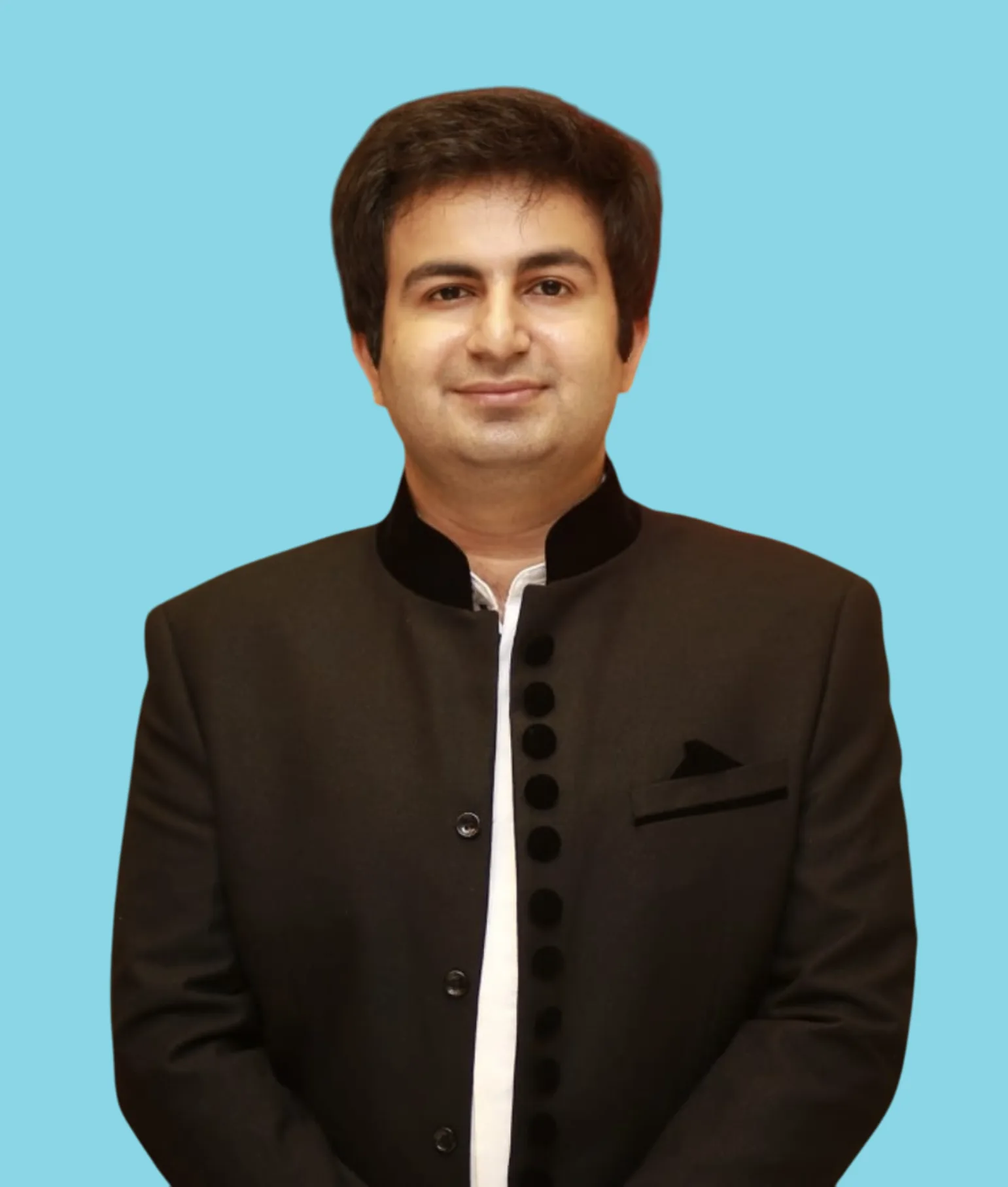
Founder-Led Strategy
Strategy is personally devised by Arslan Tariq
Arslan leads the diagnosis, strategic direction, and final priorities for each engagement. Delivery can be supported by his team, but the reasoning, roadmap, and core decisions stay founder-led.
90-day
Results guarantee
Law firms
Personal injury & mass tort
Google + AI
Dual visibility