
Case Studies
Law Firm SEO Case Studies
Real Google Search Console results from our SEO work, explained in plain English. See what changed, why it mattered, and what the numbers do and do not prove.
Proof Gallery
Real Search Console snapshots, with the numbers explained.
Each card is a real three-month snapshot from Google Search Console. The headline numbers come straight from the screenshot, and project names stay private. Click any image to see it full size.
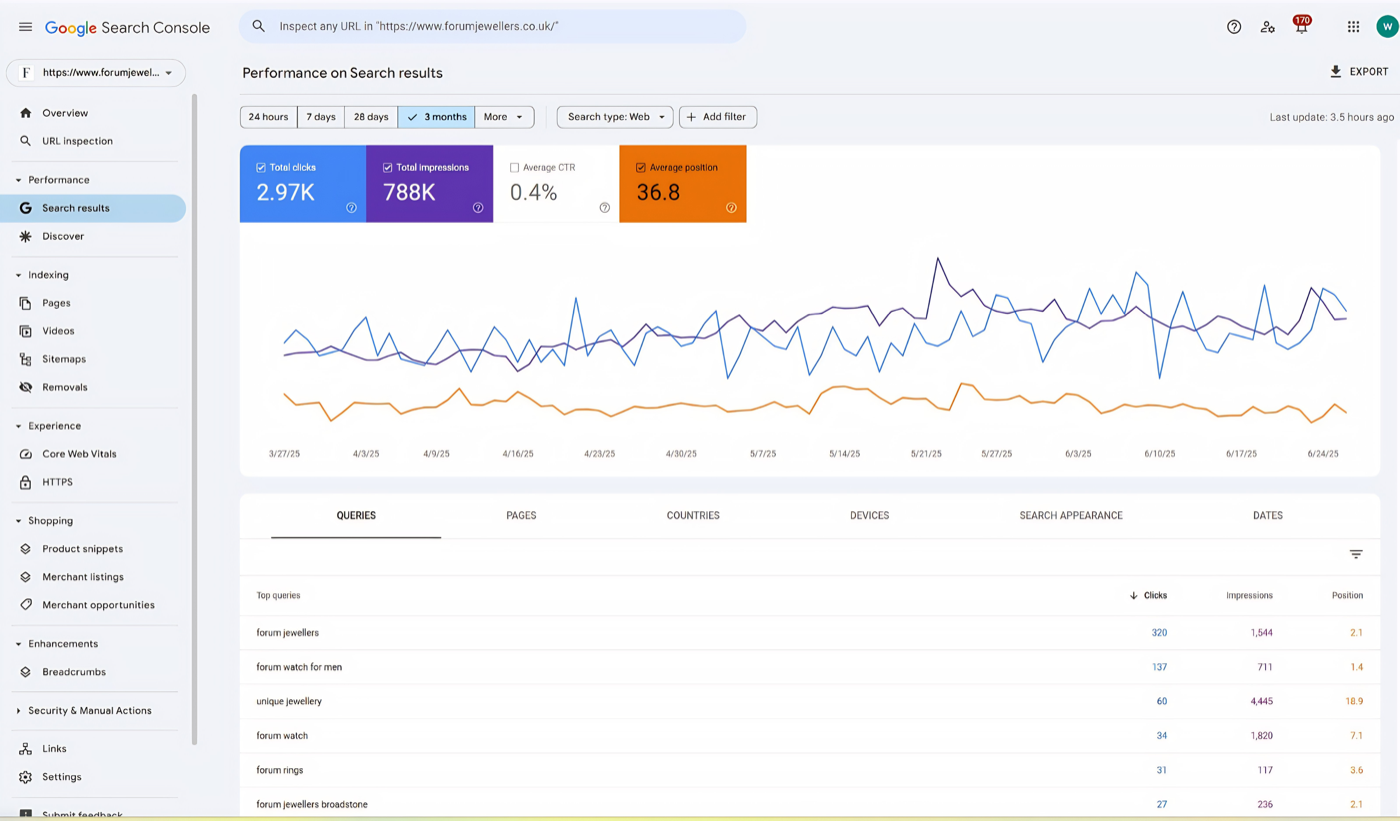
Local SEO project
788K impressions in three months
Broad local visibility across service and city searches, bringing 2.97K clicks from Google in the same three months.
- Clicks2.97K
- Impressions788K
- CTR0.4%
- Avg position36.8
Local SEO project
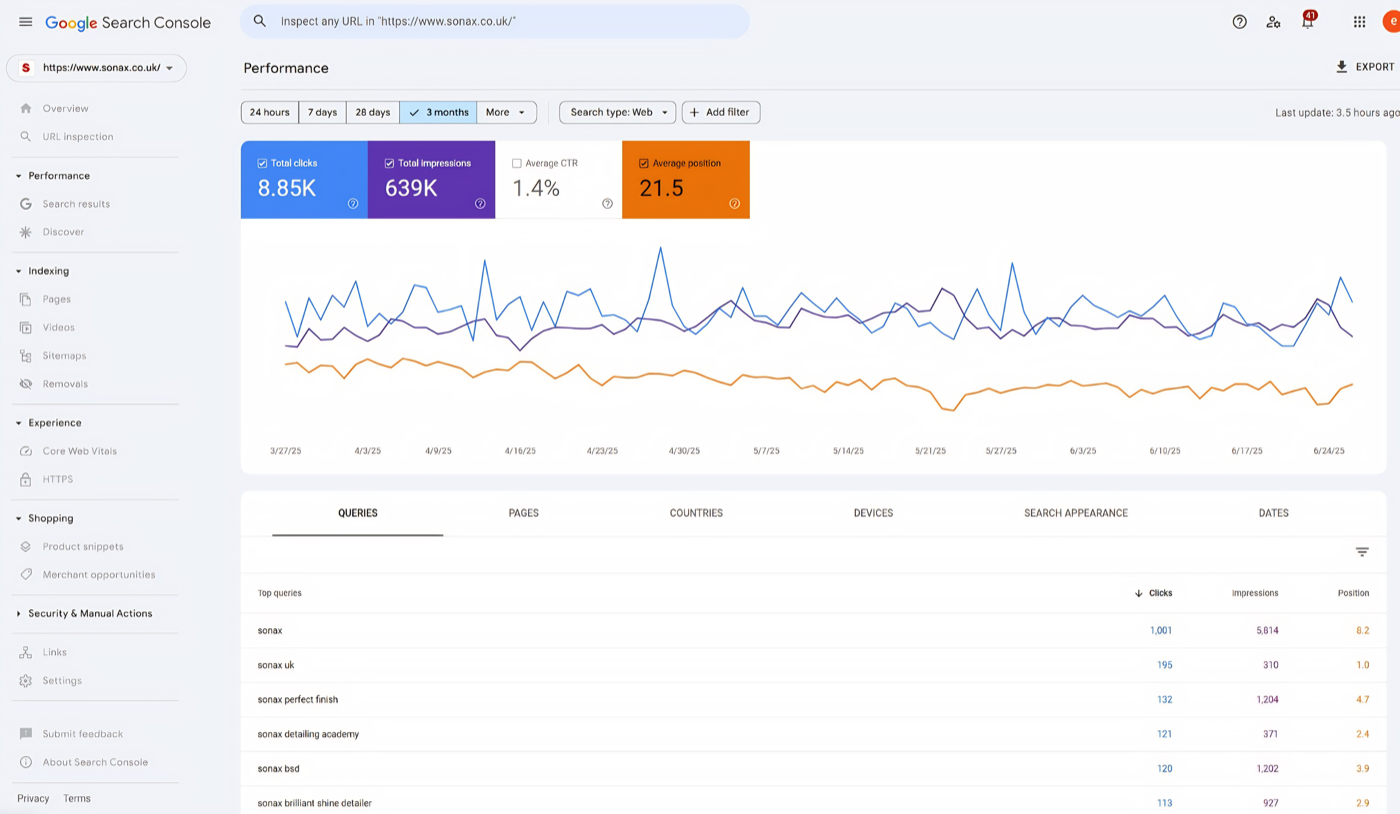
8.85K clicks at an average position of 21.5
A second snapshot from the same local SEO project, with a 1.4% click-through rate from searches close to buying.
- Clicks8.85K
- Impressions639K
- CTR1.4%
- Avg position21.5
Agency site project
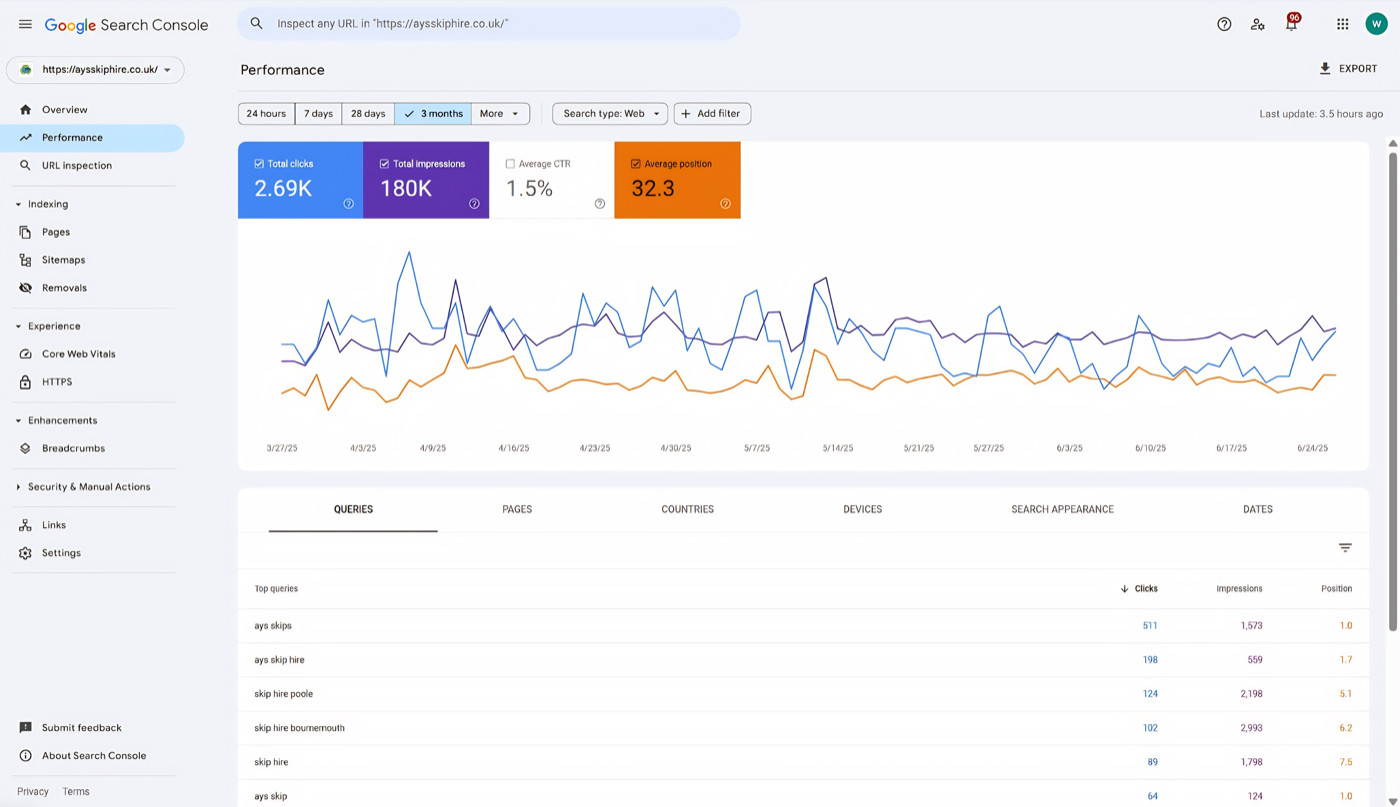
2.69K clicks at a 1.5% click-through rate
Steady clicks across a focused set of commercial searches over three months.
- Clicks2.69K
- Impressions180K
- CTR1.5%
- Avg position32.3
Agency site project
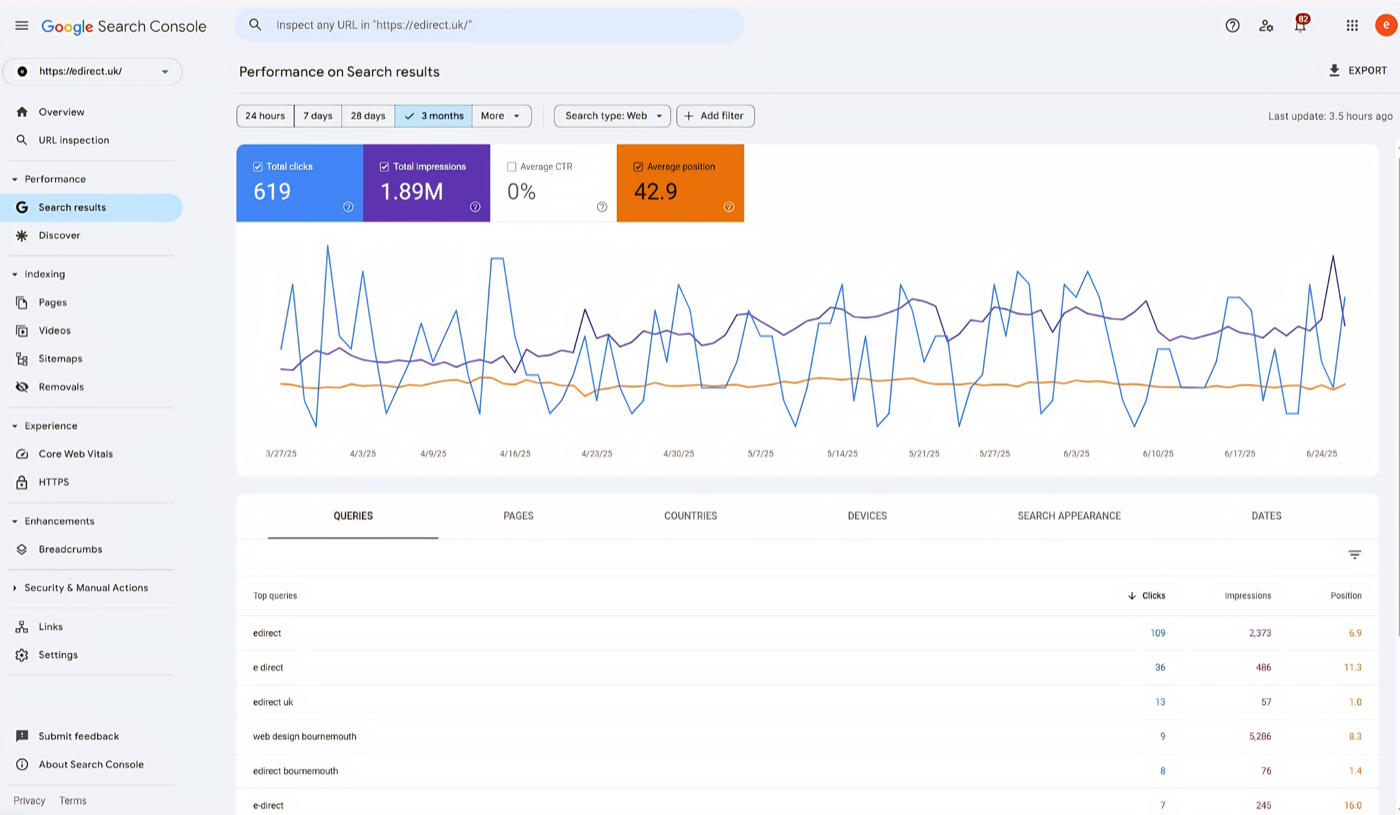
1.89M impressions across a wide search set
Early stage visibility at an average position of 42.9. This is the base that turns into clicks as rankings move up.
- Clicks619
- Impressions1.89M
- CTR0%
- Avg position42.9
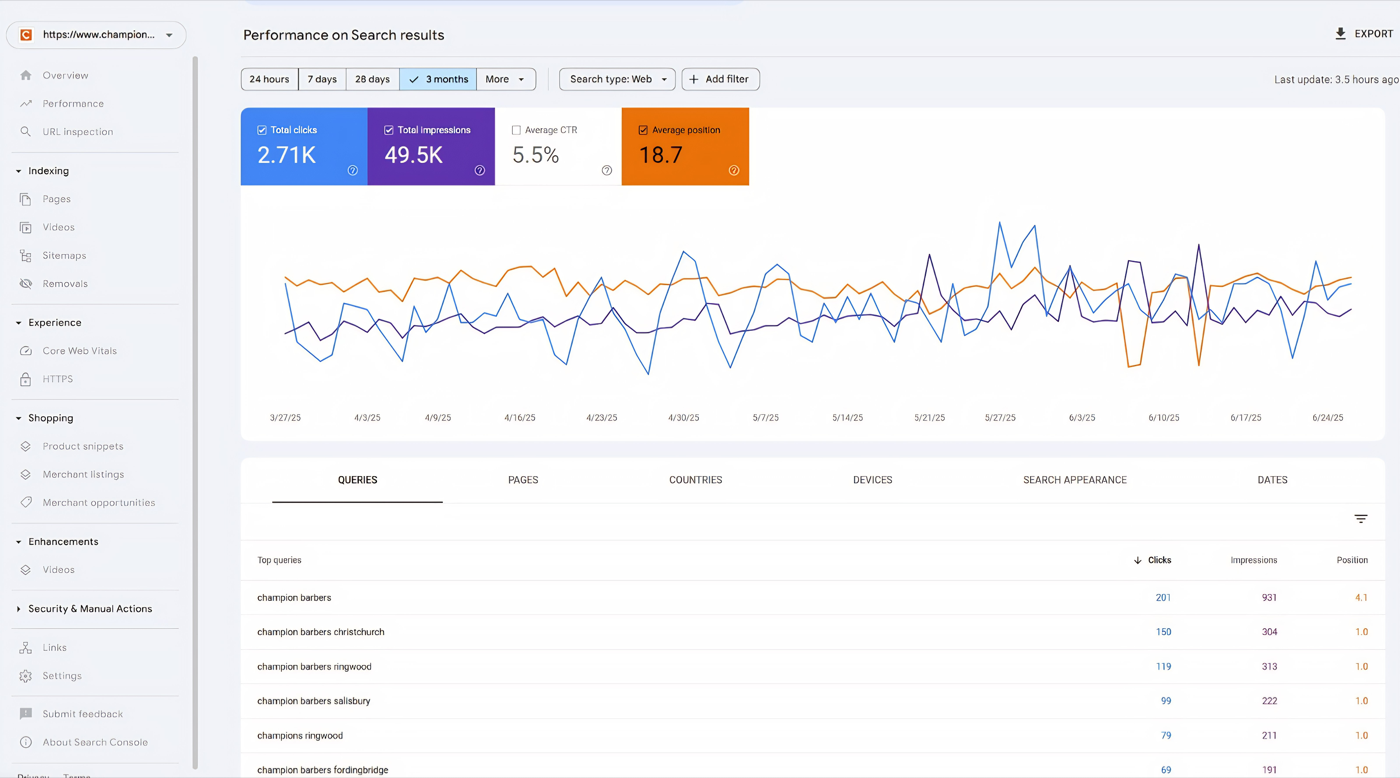
Organic growth project
5.5% click-through rate at position 18.7
Strong click efficiency. Close to 1 in 18 people who saw the site in search clicked through.
- Clicks2.71K
- Impressions49.5K
- CTR5.5%
- Avg position18.7
Organic growth project
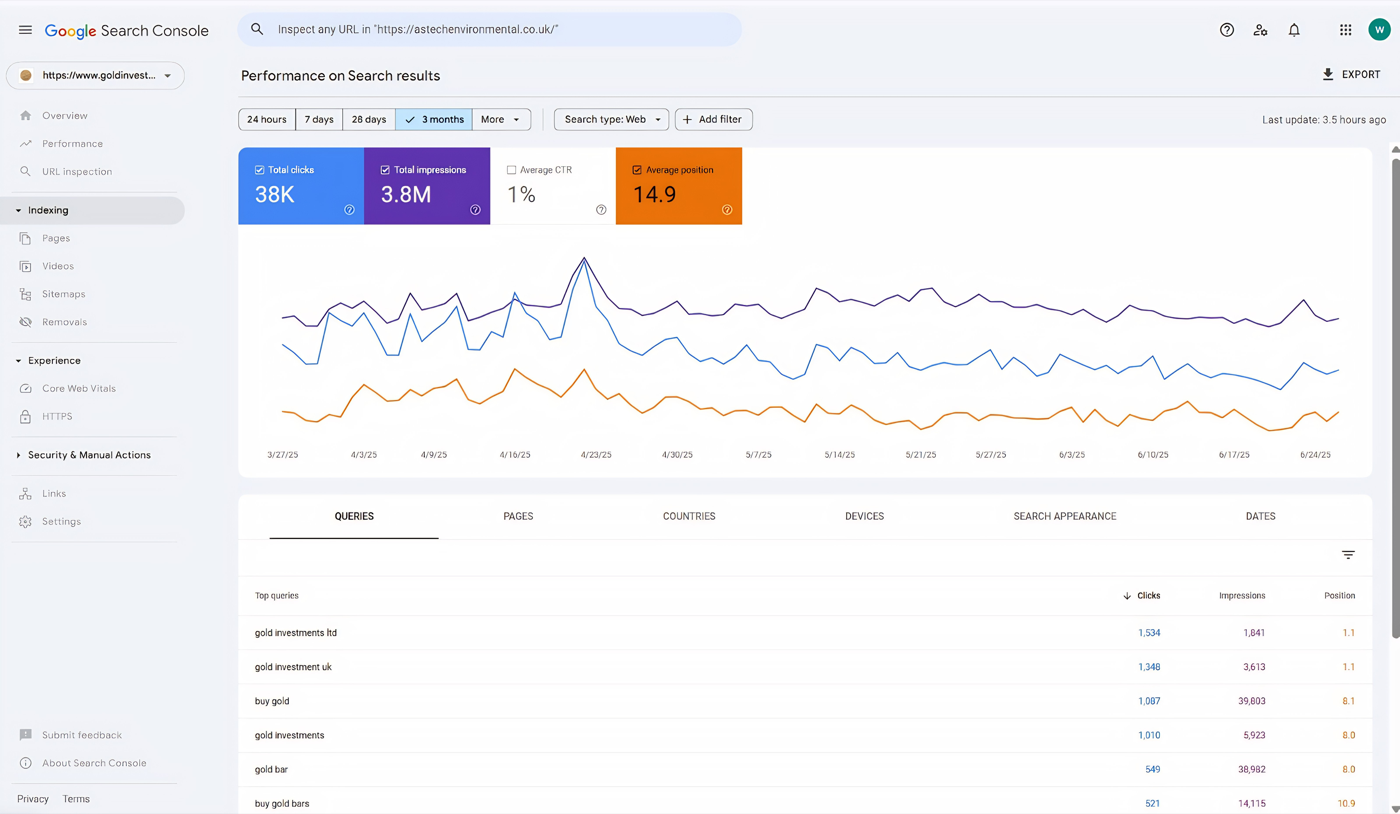
38K clicks and 3.8M impressions
The largest snapshot on this page, with an average position of 14.9 across three months.
- Clicks38K
- Impressions3.8M
- CTR1%
- Avg position14.9
Law firm site
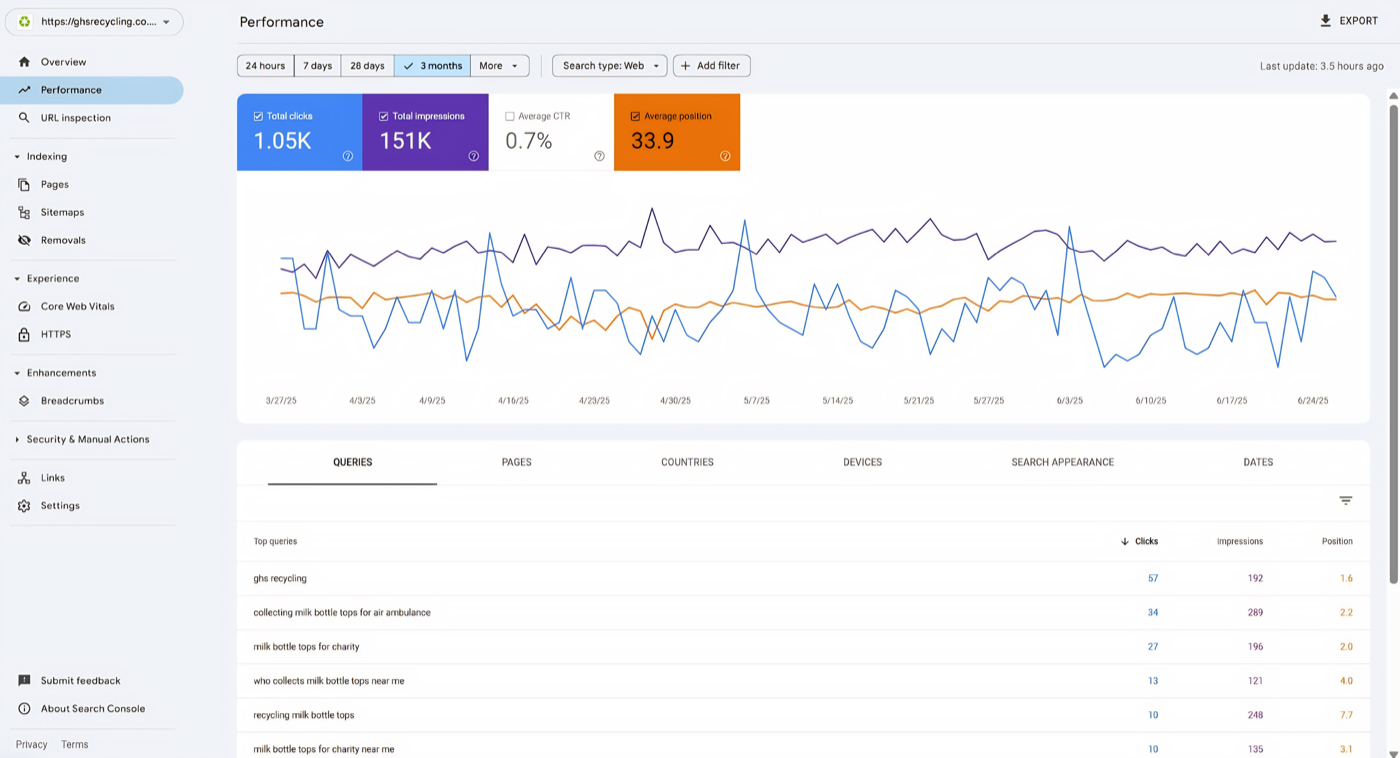
151K impressions and 1.05K clicks for a law firm
Legal search visibility over three months at an average position of 33.9.
- Clicks1.05K
- Impressions151K
- CTR0.7%
- Avg position33.9
Law firm site
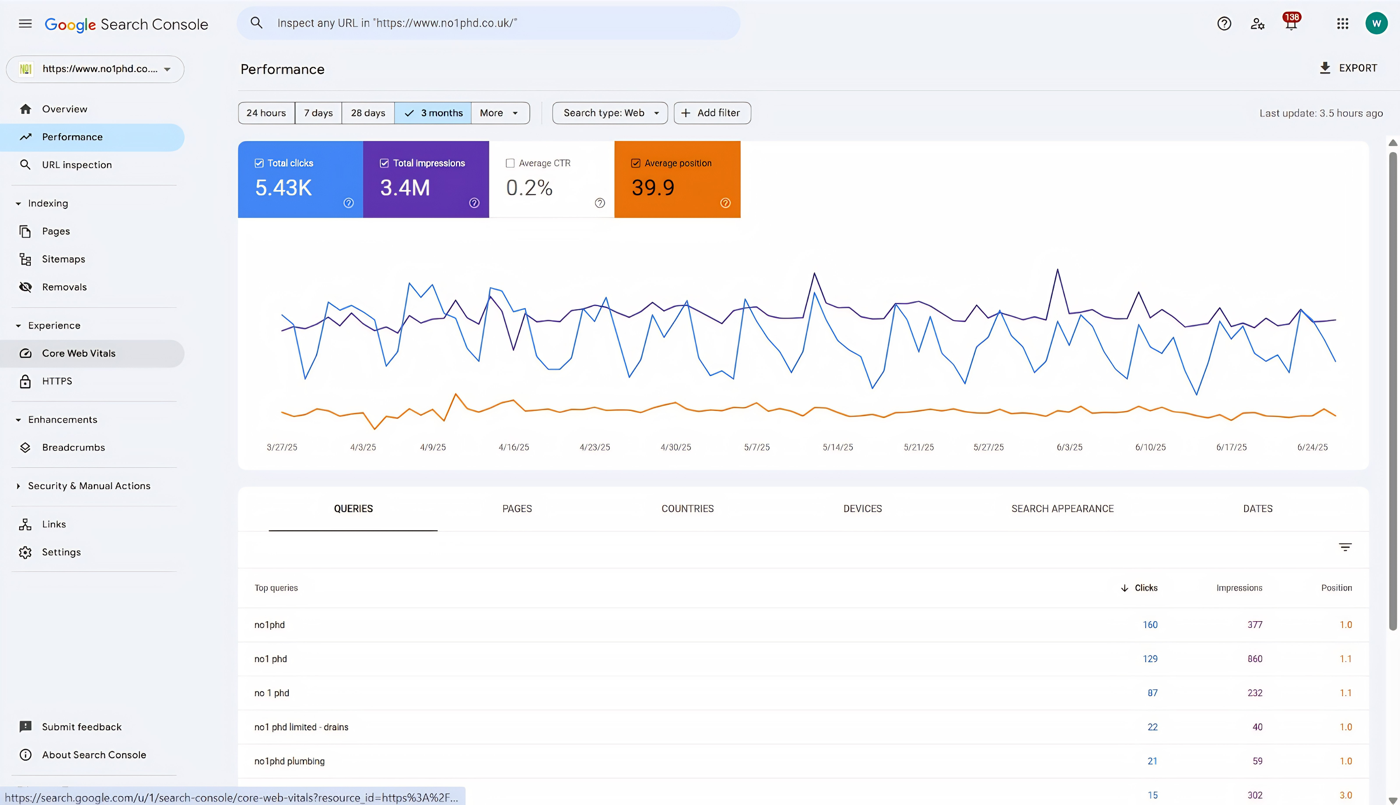
3.4M impressions and 5.43K clicks
A second law firm snapshot showing wide legal search visibility at an average position of 39.9.
- Clicks5.43K
- Impressions3.4M
- CTR0.2%
- Avg position39.9
Page Outline
Jump to the key sections on this page.
What Our Law Firm SEO Case Studies Show
These law firm SEO case studies show real Search Console results and explain what they mean. The goal is not to show the biggest numbers. It is to show the results that matter to a law firm: more visibility for the practice areas that bring in fees, better case inquiries, stronger authority against bigger firms, and more calls from the map pack.
Some of the most useful wins look small on a chart. Moving from position 15 to position 4 for one high value case type can matter more than a big jump in total traffic. That is the lens used on this page.
How to Read Law Firm SEO Results
Every card above shows the four numbers Google Search Console reports. Each one tells you something different, and none of them tells the whole story alone.
- Clicks show how many people came to the site from Google search.
- Impressions show how often the site appeared in search results. They measure visibility, not value.
- CTR (click-through rate) shows how many people clicked after seeing the site. It depends on position and on how well the title matches the search.
- Average position blends every search the site showed up for. It can hide big gains or losses on the searches that bring in cases.
Types of SEO Results for Law Firms Shown Here
Most SEO wins fall into a few types. Each type of problem leads to a different kind of result, so it helps to know which one you are looking at.
- Visibility rebuilds, where site structure or technical problems were holding rankings back
- Authority growth, where real links and trust signals helped a site compete with stronger firms
- Local search wins, where the Google Business Profile and city pages brought more map pack visibility
- Practice area strategy, where content was built around how injured people actually search
Who These Attorney SEO Case Studies Are For
This page is written for personal injury and mass tort law firms in the US that want to see how SEO results are measured before they hire anyone.
Project names stay private unless the owner agrees to share them. The numbers are real, and they are shown with care rather than used as borrowed credibility.
The work behind these results was led by Arslan Tariq directly, so each result can be explained first hand, not summarized from a team report.
How We Track SEO Results for Law Firms
Work runs on a fixed schedule. Every two weeks the firm gets a short report covering what changed, what moved, and what it means for case intake.
Rankings are tracked by practice area and case type, not only for the whole site. A firm that wants more brain injury cases needs to know where it ranks for brain injury searches in its own city, not a blended number for personal injury overall.
This takes more setup than a standard rank tracker. But it is the only way to know if the most valuable part of the practice is growing or slipping.
What Makes an SEO Case Study Credible
A credible SEO case study answers four questions. If one is missing, the result is easy to misread or oversell. The best case studies also say what the data does not prove, and that honesty is a big part of why they can be trusted.
- What was weak before the work started?
- What changed on the site or in the strategy?
- What result followed, and over what time period?
- Why did that result matter for the business?
Good SEO Proof vs Weak SEO Proof
A chart with a rising line does not prove anything by itself. What makes proof real is the explanation around it.
- Good proof names the starting problem. Weak proof jumps straight to the result.
- Good proof explains what changed. Weak proof says something vague like "we optimized the content."
- Good proof says what the data does and does not show. Weak proof lets a chart imply more than it can support.
- Good proof connects results to calls and consultations. Weak proof stops at impressions or clicks.
Common SEO Problems We Fix on Law Firm Websites
Every firm and market is different, but the starting problems repeat. That is why the fix is rarely a single change.
- One practice area page trying to rank for every case type, instead of a deep page for each one
- Generic legal marketing copy that does not show real knowledge of the case type
- A Google Business Profile that is incomplete, inactive, or does not match other listings
- Fewer quality links than competitors who have been building authority for years
- Internal links that send authority away from the pages that bring in cases
Why Every SEO Result Here Has a Date
Search results change, and mass tort cases change fast. A case type with strong visibility can go quiet within months if the litigation settles or intake closes. A result that is never revisited can become misleading, even if it was true when it was posted.
That is why every result on this page is treated as a dated snapshot, not a permanent claim. Older examples stay up while they still show the method honestly, and they are replaced or clearly dated when newer results come in.
Why Law Firms Should Ask for SEO Case Studies
Case studies are not there to impress you. They help you judge whether an SEO provider understands your practice areas, your competitors, and how injured people search for a lawyer.
A personal injury firm needs different proof than an online store. Ask for examples that show rankings by case type and city, and how those rankings connect to calls and consultations. For a full checklist, see questions to ask an SEO provider.
Frequently Asked Questions
Why are law firm names not shown in these case studies?
Many law firms prefer to keep their SEO work private, and that choice is respected. The Search Console data is still real, so you can judge whether the type of result shown is credible and relevant to your firm.
How recent are these SEO results?
Each snapshot covers a three-month window of Google Search Console data from 2025. They stay on this page because they still show the method clearly, and they will be replaced or re-dated as newer results come in.
How long does SEO take to work for a law firm?
Most firms see early movement in about 90 days. Strong rankings in competitive markets usually take 6 to 12 months. See the law firm SEO timeline for a month by month view.
Can you guarantee SEO results like these?
No. Nobody controls Google, and anyone who guarantees a ranking by a set date is guessing. What can be promised is clear work, honest reporting, and a plan built for your market. Read why we do not promise 30-day rankings.
What should I ask an SEO agency for before hiring?
Ask them to walk through one real example: the starting problem, what they changed, what happened, and why it mattered. A provider with real results can do that easily. Vague answers are a warning sign.
See What SEO Could Do for Your Firm
If these results feel relevant, the next question is whether the same approach fits your market, your competitors, and the gaps on your site.
Start with a free law firm SEO audit, book a strategy call, or read how results are measured in Results Methodology and our main law firm SEO guide.
Next Step
Want to know what results like these could look like for your firm?
Start with a free audit. You will get a short, honest look at your site, your authority, and the first changes most likely to bring in more cases.